

Clive Davis: "Hitmaking Titan of the Music Industry"
Harry Golden laid out a blue print for success in this mantra: “Dress British but think Yiddish.” He should have added that a Brooklyn childhood constituted a trifecta formula for fame and fortune. An avatar of this folk wisdom formula from the sage of North Carolina, Clive Davis died last week on June 22, 2026, at age 94. Born on April 4, 1932, he was nobody’s fool. His parents Herman and Florence named him Clive because they admired a British actor named Clive Brook, who romanced Marlene Dietrich on film in the Shanghai Express if not off the screen as did many of her male as well as female co-stars.
Raised in a middle class home in Brooklyn’s Crown Hights, young Clive attended Erasmus Hall High School, New York University, and Harvard Law School on his trek to success. A political science major in college and Harvard Law School on a scholarship, Davis climbed the educational ladder to the good life. After several years as a lawyer in a prominent law firm with Jewish roots, however, Davis grew bored. When a former associate, Harvey Schein (by mier bistu shayn) beckoned, Davis jumped ship to join Columbia Records, a CBS subsidiary. One year later he rose to general counsel under the aegis of Goddard Leiberson, a Jewish mentor, who promoted Davis general manager in 1965. This group morphed into CBS Records with Clive surging to the top in 1967 as president.
In this new role, Davis flourished--tapping into contemporary musical trends. Cognizant of a rising youth culture linked to music, he attended the Monterey Pop Festival in 1967, which proved pivotal in his embrace of rock and roll. He signed Janis Joplin. Lauro Nyro (David Geffen’s ticket to ride the caravan of success), Tony Orlando at the crack of dawn of his bountiful career, along with Carlos Santana, Bruce Sprinsteen, Billy Joel, Aerosmith, Earth, Wind, and Fire. and the Grateful Dead.
Davis convinced Barry Manilow to sing rather than write the songs. When the young Williamsburg artist insisted that he preferred writing to singing, Davis succinctly stated that you will never be Irving Berlin. Manilow, also bi-sexual, listened and learned. Before he was terminated by CBS Columbia Records for a scandal, involving payola and drugs, Davis branched out to country music with Lynn Anderson ;s mega hit “Rose Garden. A disgruntled colleague “ratted out” Davis, who denied all charges, pled guilty to income tax evasion in 1976.
Resilient, Davis created Arista Records after leaving Columbia Records, taking the name from an honorific for honor students in New York City high schools. Employing a rare gift of matching a performer to his or her music, Clive Davis rocked and rolled to fortune and fame. At Arista, he shepherded Aretha Franklin, Barry Manilow, Carlos Santana. Kenny G, and Patti Smith to success and stardom, as recalled in his autobiography, The Soundtrack of My Life (2013 and on film (2017). Significantly, he discovered Whitney Houston at age 19, carefully grooming her with songs to match her magnificent voice and striking beauty. Unfortunately, he could not save her from self-destruction triggered by drug abuse at age 48.
At age, 80 Clive Davis came out of the closet as bi-sexual with a preference for men as partners after two marriages with nice Jewish women, Helen Greiff and Janet Adelberg failed. Although they produced four children: three boys and a girl. Starting in 2013, Clive began a relationship presumably with a Jewish mother’s dream object: a doctor whose identity remains unknown like the iconic soldier. His relationship was Greg Shriefer, almost 30 years younger than Clive. Along with family friends and multiple artists whose fortunes were fashioned by the great music promoter, Mr. Shreifer mourns Clive David at his funeral today.
Had he lived a bit longer, Clive Davis might have attended the Gay Pride Parade on Saturday and hosted one of his famous parties that highlighted the scene after the Grammy Awards. His quest for the good life ended on June 22, 2026; but songs and lyrics that he produced, directed, and inspired go on. His late-life sexual conversion illustrates the comic wisdom of Woody Allen, another Brooklyn Jewish genius. A bisexual man or woman doubles the chances for a date on Saturday night. On this night, however, Clive Davis has a rendezvous with destiny.
Davis became one of "music's most powerful executives". He was noted for elevating the careers of several influential musicians such as Aretha Franklin; Barry Manilow; Billy Joel; Carlos Santana; Chicago; Earth, Wind and Fire; Aerosmith; Bruce Springsteen; and Whitney Houston.
Respectfully, Joe Dorinson

Neil Sedaka: Songwriter and hitmaker over multiple generations
Neil Sedaka’s career stands as one of the most enduring in American pop music, stretching from the late 1950s through 2026. A classically trained pianist from Brooklyn, he transformed early talent into a remarkable catalog of more than 500 songs, many written with longtime collaborator Howard Greenfield. His rise began with hits like "Oh! Carol", "Calendar Girl", "Happy Birthday, Sweet Sixteen", and the iconic "Breaking Up Is Hard to Do", which became one of his signature songs and a defining track of early pop. Even after the British Invasion briefly dimmed his spotlight, Sedaka reinvented himself in the 1970s with chart-toppers such as Laughter in the Rain and Bad Blood, aided in part by Elton John’s support.
Beyond his musical achievements, Sedaka was widely remembered as a warm, gracious, and deeply family‑oriented person. His loved ones described him as a devoted husband, father, and grandfather. Those who worked with him often spoke of his generosity and gentle spirit, qualities that helped sustain lifelong creative partnerships and friendships. Sedaka’s legacy lives on not only in his timeless songs but in the affection and respect he inspired throughout his life.
Danny Kaye: The Boy From Brooklyn
The wonderful Danny Kaye American was not only a brilliant actor, but he was also a singer, dancer, comedian, musician, and philanthropist. He is most known for his roles in many comedic films, but he has also acted on television and on the stage. He has entertained so many of those who have seen him perform, who have had the opportunity to see his physical comedy, his facial expressions and those little fast-paced songs that he sung.
Danny was born David Daniel Kaminsky in Brooklyn, New York. He attended P.S. 174 in Brooklyn, then went to Thomas Jefferson High School, also in East New York, where he eventually, it is told, was expelled from the school by the principal at the time, Dr. Elias Lieberman.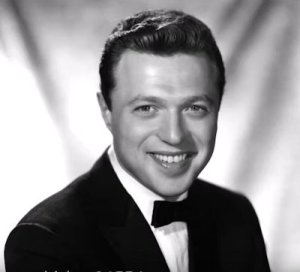
Steve Lawrence
The boy from Alabama Avenue in East New York, Brooklyn, made it to Hollywood, to fame and fortune as a wonderful singer and humanitarian. Steve had success on the record charts in the late 1950s and early 1960s, Though best known for his golden voice, Steve also acted on the stage, winning a Drama Desk award for his role as Sammy Glick in "What Makes Sammy Run." His song, "Go Away, Little Girl," sold over one million copies and was awarded a Gold record. However, much of his musical career has centered on nightclubs and the musical stage. He is also an actor, appearing in guest roles on many television shows in every decade since the 1950s, with and without his beautiful wife Eydie Gormé.

Marty Levitt
Marty Levitt was born into a musical family. His father and uncles were active on the Jewish music scene and had worked with many of the well known musicians of that time, as well as with giants of the Yiddish Theatre. As a child Marty lived in Bialystok, Poland, for three years with his mother. They returned home in April 1939, just months before the war broke out.
Levitt began studying clarinet at age ten. His teacher was a classical clarinet instructor. Of course he started learning freilachs and bulgars from his father Jack who was a trombonist. By the time Marty was seventeen, he left Thomas Jefferson High School and began “booking” work around Brownsville under his own name. The summers were spent in the Catskills each year working at a different hotel.

Elias Leiberman
Though most all of those students of Thomas Jefferson High School in Brooklyn, New York, who were under the charge of the school's first and most prominent principal, Elias Lieberman, it can be said that he greatly influenced his students as they passed through their graduation and made their way into the world that awaited them. He was the school's first principal, beginning in 1924, and ending in 1940. Not only was Elias Leiberman a well-respected principal, he also was a writer and a poet. His most prominent writing was a poem entitled, "I am an American." He also published an anthology of his works.

William Rolland
After returning from his native Russia in 1906, William Rolland arranged several theatre productions. Soon thereafter, he returned to America, and there he married the Yiddish actress Pauline Hoffman. Through this he became excited about Yiddish theatre, but his first connection with professional Yiddish theatre began initially in 1916, when he became a cashier for Max Gabel in the New York City's Lipzin Theatre, where he worked until 1920. In 1921 he was lessee of the Liberty Theatre, where he engaged Clara Young to play. In 1922 he was manager in Gabel's Mount Morris Theatre. In 1923 he again returned to Russia and brought to America with his partner Boris Thomashefsky, the Vilna Troupe.

I Remember When ... My Memories of Brooklyn
Many of us have such fine memories of our youth, precious recollections of the place we called home, our family members, the foods, and the aromas that still waft through our nostrils; the neighborhood that we joyfully played in, the schools we went to, our social lives, the relatives we visited or who visited us. All of these made us who we are. They are memories so dear to us that they often tug at our heart strings and bring a tear or two to our eyes. How we miss those times, those who we spent our youth with, whom we loved and who loved us. Here you will read (and hear) accounts of many who recall so vividly the good and bad times of their youth, who thankfully were interviewed some years ago to recall their childhood and adolescence.